
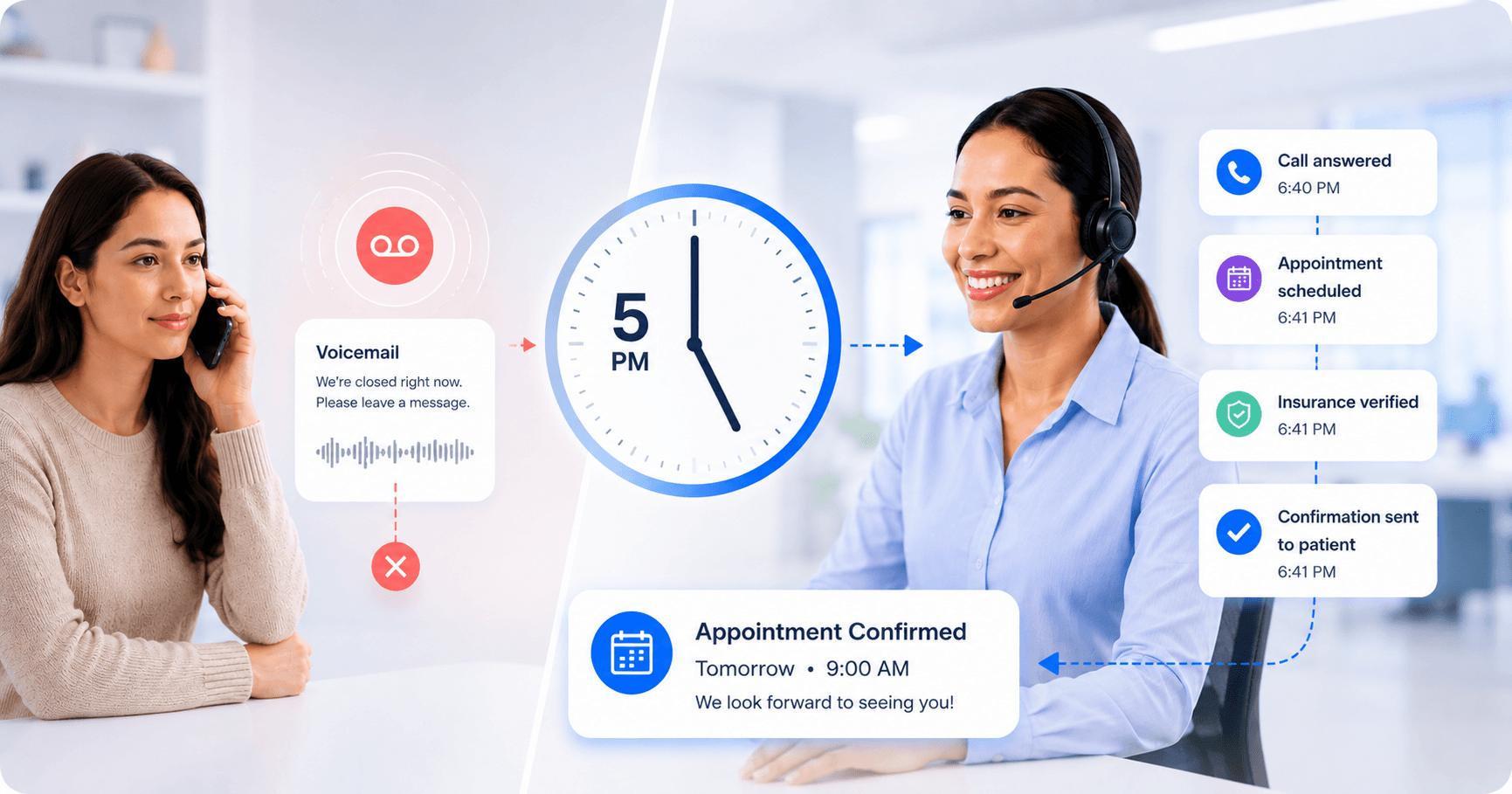
Your front desk closes at 5 PM. Patient demand does not, so knowing how to stop losing patients to voicemail starts with seeing where that gap appears. A 2024 Medical Group Management Association (MGMA) survey found that staffing challenges were widespread across medical practices, including front-desk and contact-center roles. 53% of medical group leaders said finding qualified candidates was their top staffing challenge.
That staffing pressure makes it harder to solve after-hours coverage with another evening shift. When calls go to voicemail, patients face a delay between requesting care and getting an appointment. Another provider may respond before your team can.
For health systems and DSOs, the loss can extend beyond one appointment. A missed call can interrupt referrals, delay access, and prevent a new patient relationship from starting.
This guide explains how to stop losing patients to voicemail by showing what the after-hours gap costs and what always-on coverage needs to do to close it.
Why do patient calls continue after the front desk closes?
Patient demand follows patients' schedules, not your office hours. Evenings, weekends, and holidays can drive meaningful call volume because patients finally have time to address appointments, referrals, insurance questions, and care needs.
This pattern matters most for organizations serving working adults, families, and patients referred for specialty care. These patients may have limited opportunities to call during traditional business hours.
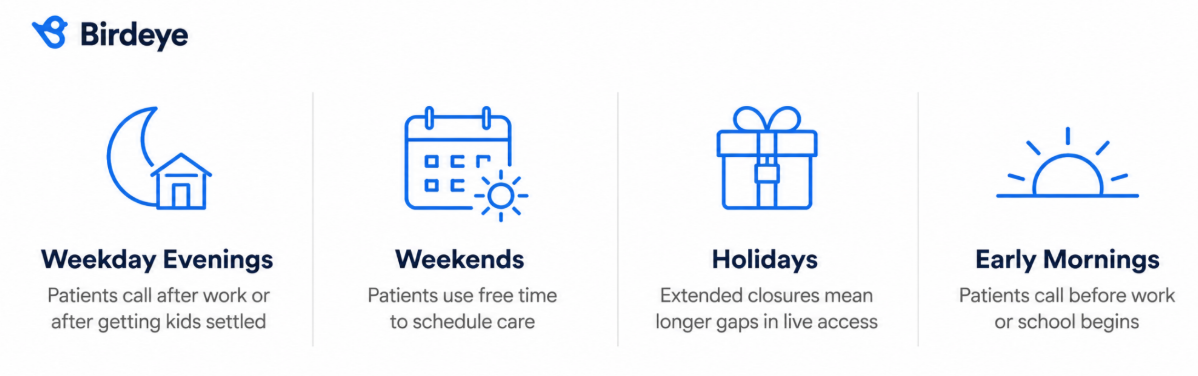
The operational problem is that staffed hours are fixed, but patient demand continues outside those hours.
What happens when patients reach voicemail after hours?
The biggest problem with voicemail is not the message. It is the delay between intent and action.
Suppose a dental patient calls at 6:40 PM after cracking a tooth. The office closed at 5 PM. The patient hears a voicemail greeting, decides not to wait, searches for a nearby dentist who is open, and reaches another practice.
The first practice may never know that the patient was ready to book, even after investing in dental lead generation.
Now apply the same pattern to a health system. A patient receives a referral for a specialist and calls at 7 PM to schedule. The referral office is closed. The patient calls another specialist group that answers and gets an appointment.
Nothing went wrong during staffed hours. The loss happened after hours.
Adding evening or weekend staff is one answer to how to stop losing patients to voicemail, but it creates a difficult scaling problem for multi-location organizations. You may not have a canceled appointment to flag. There may not even be a message. A patient may simply never have entered your scheduling workflow.
How does one missed call become lost patient value?
A missed after-hours call can represent more than one appointment. For a DSO, a new patient relationship can lead to preventive care, restorative treatment, specialty services, and future visits. For a health system, a referral can connect a patient to additional services across the organization.
Referral relationships can also suffer because healthcare referral management depends on patients being able to book follow-up appointments. When referring providers know patients can reliably reach a specialist, access supports the referral experience. When patients repeatedly encounter closed lines or delayed callbacks, they have more reason to look elsewhere.
There is also an acquisition cost. If a patient found the organization through search, advertising, referrals, or reputation, the organization has already invested in acquiring that patient to generate demand. The phone call may be the final step before scheduling.
That makes the important metric more than missed calls. It is patient demand that never becomes scheduled care.
What does the data say about patient access friction?
Healthcare consumers already treat access to appointments as part of provider choice. Press Ganey's 2025 consumer research found that 80% of consumers say online scheduling influences their provider choice, while 24% say they will look for other options when booking is not easy. The research draws on 6.5 million patient encounters and a nationwide consumer survey.
The study does not measure after-hours voicemail specifically. It does show why access friction matters. When a patient is ready to schedule but cannot take the next step, the experience can influence whether they continue with that provider.
Patient access should be measured across the entire journey, including the hours when the front desk is closed, as part of customer service in healthcare.
Why isn't hiring more front-desk staff the answer?
Adding evening or weekend staff can extend coverage, but it creates a difficult scaling problem for multi-location organizations.
Health systems and DSOs may have hundreds of locations, different schedules, multiple appointment types, and different escalation rules. Covering every evening, weekend, and holiday with staff adds another labor requirement to an already constrained front office.
Traditional answering services, including virtual receptionist call answering, solve a narrower problem. Someone answers the phone and records the request, but the patient may still need a callback before anything happens.
That distinction matters. Answering the phone is not the same as completing the work.
If the person answering cannot access the live schedule, book the appointment, or write the action back to the EHR or PMS, the patient is still waiting for the next business day.
What does real after-hours patient coverage need to handle?
How to stop losing patients to voicemail comes down to coverage that performs the routine work a front desk performs during staffed hours.
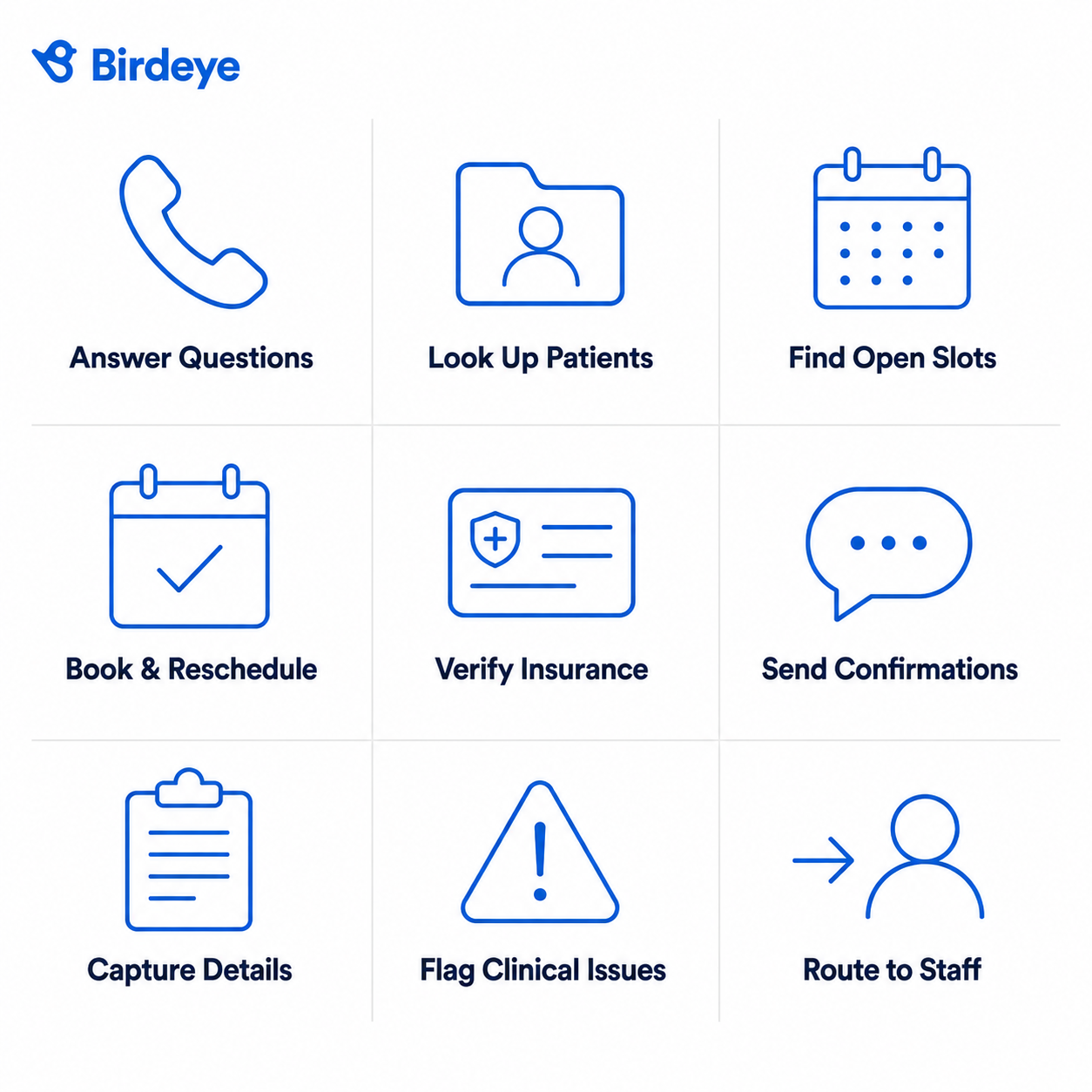
That means an after-hours system should be able to:
The critical distinction is message-taking versus workflow completion.
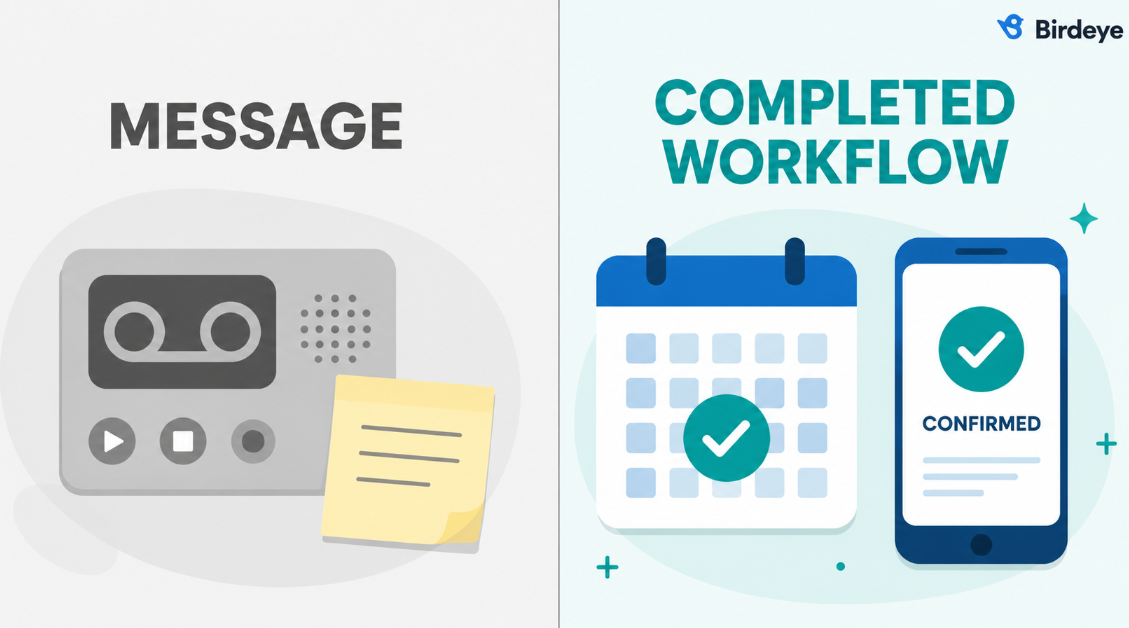
For organizations trying to protect patient access after 5 PM, that difference matters.
How does Myna extend after-hours coverage without adding headcount?
Myna, Birdeye’s Operations AI Coworker, helps enterprise healthcare and dental organizations stop losing patients to voicemail. It provides 24/7 front-office coverage across voice, chat, text, and email using conversational AI in healthcare, while staff retain the judgment calls.
The important part is what happens after the call is answered.
Myna's Front Desk Agent can handle appointment workflows, including booking and rescheduling. The system can work with live EHR or PMS information and write completed appointments back to the system of record.
A patient calls at 6:40 PM. Myna answers. It checks the live schedule, completes the booking workflow, and writes the appointment back to the EHR or PMS. The patient gets confirmation. Staff arrives the next morning to a completed appointment, not a voicemail queue.
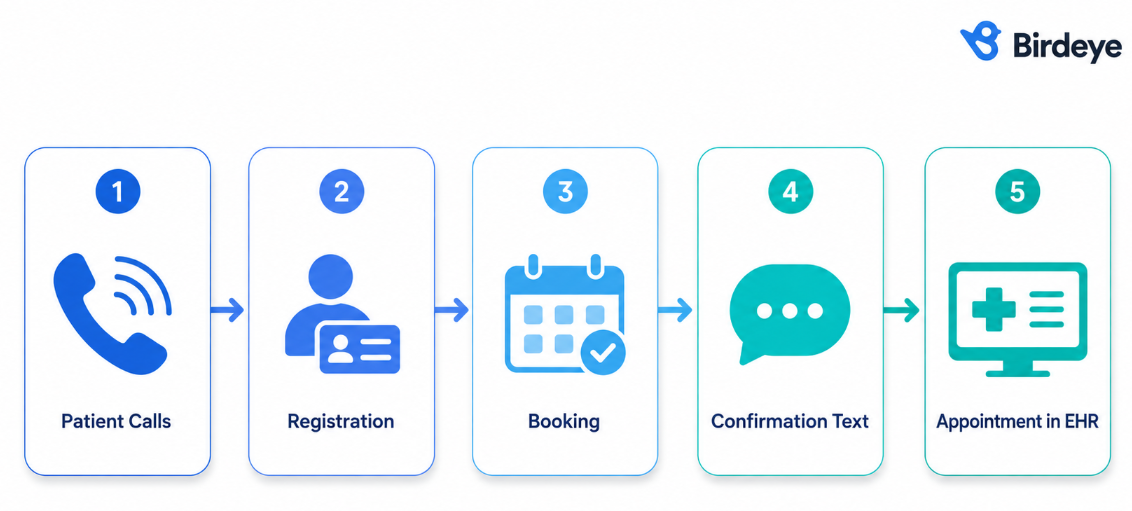
The agents also work from a shared patient context rather than operating as isolated bots, which separates a coordinated system from single-purpose patient engagement tools. A cancellation can trigger the Waitlist Agent to help fill the newly available slot. Other workflows can handle reminders, recalls, pre-visit tasks, and insurance verification.
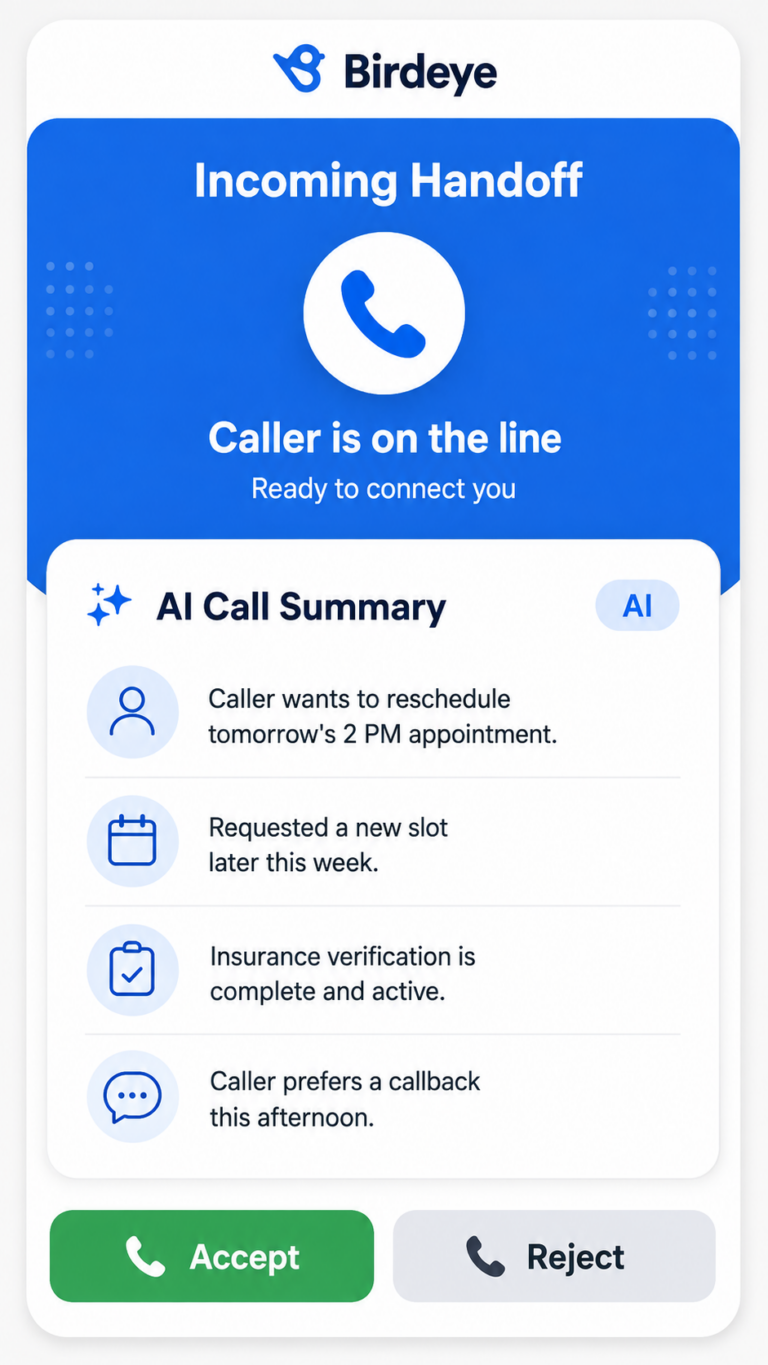
Human judgment remains part of the model. When an issue is clinical or outside the scope, Myna can summarize the interaction and route it to staff with context.
How should health systems and DSOs measure the after-hours gap?
Start by measuring what happens between the end of staffed hours and the beginning of the next business day.
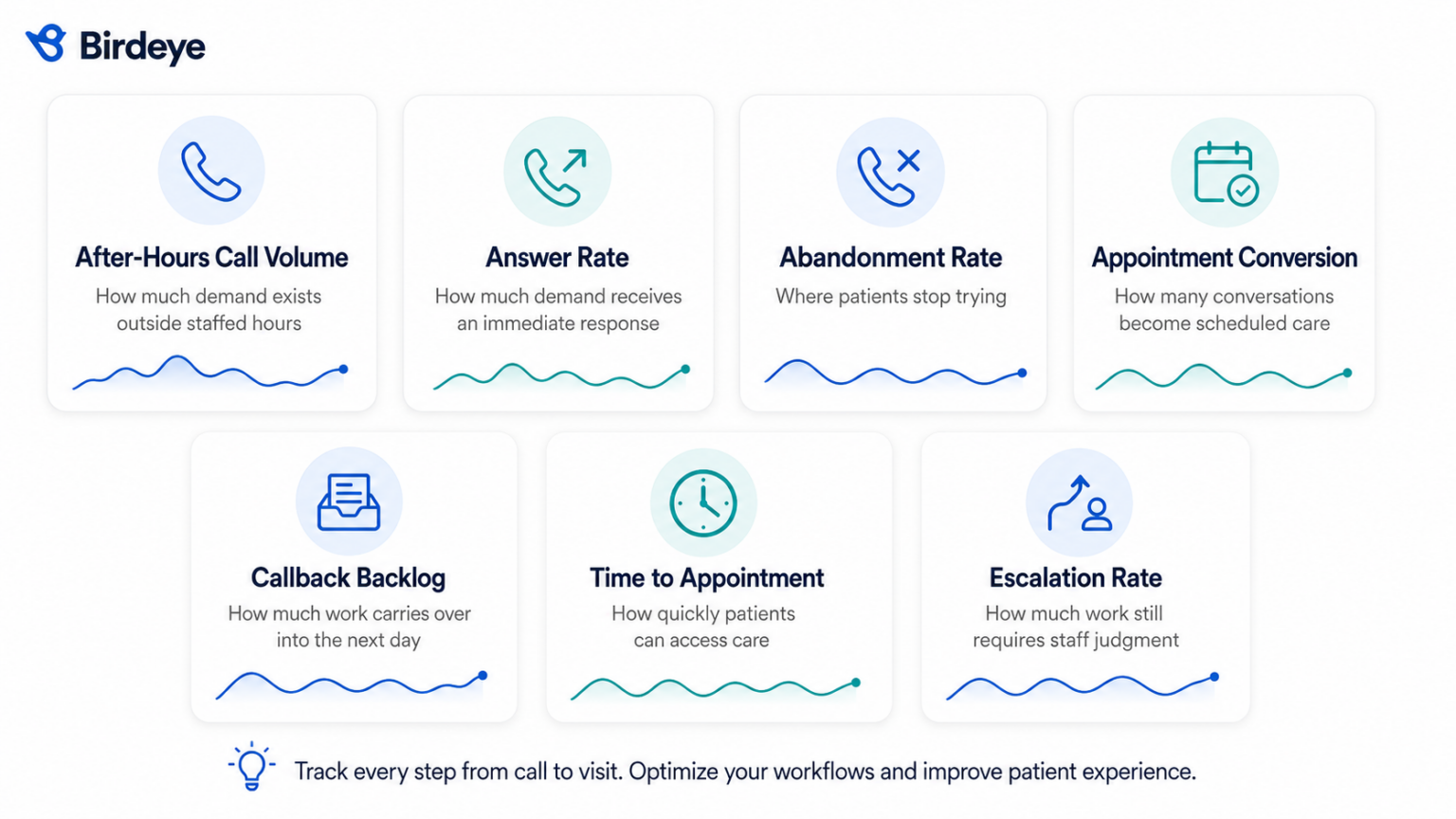
Track these metrics across locations:
| Metric | What it reveals |
| After-hours call volume | How much demand exists outside staffed hours |
| Answer rate | How much demand receives an immediate response |
| Abandonment rate | Where patients stop trying |
| Appointment conversion | How many conversations become scheduled care |
| Callback backlog | How much work carries over into the next day |
| Time to appointment | How quickly patients can access care |
| Escalation rate | How much work still requires staff judgment |
A single location might see five or ten after-hours calls a night. Across 300 locations, that's 1,500 to 3,000 calls a night going somewhere, or nowhere.
The goal is not to keep every front desk open all night. It is to make sure patient demand has somewhere to go when the front desk is closed.
How can organizations stop losing patients to voicemail after 5 PM?
The answer to how to stop losing patients to voicemail is not better voicemail management. It is always-on coverage that can complete routine patient-access workflows and bring humans in when judgment is required.
For health systems and DSOs, that means patient demand can continue moving after hours without creating another staffing shift for every location.
Myna is built around that model. It extends front-office capacity beyond staffed hours, helping organizations capture appointment demand without requiring an additional shift on evenings, weekends, and holidays.
Your front desk can close at 5 PM. Patient access does not have to.
Want to see what always-on front-office coverage looks like in practice? Explore how Myna handles after-hours calls, scheduling, and routine patient workflows while your staff stays in control of the conversations that require human judgment.
FAQs
About the Author
Shruti Dugar is a Senior Content Marketing Writer with 11+ years of experience in content and storytelling. At Birdeye, she writes about how AI coworkers help multi-location brands win AI visibility and deliver seamless customer experiences. She’s also a published author & enjoys traveling. Connect with Shruti Dugar on LinkedIn.